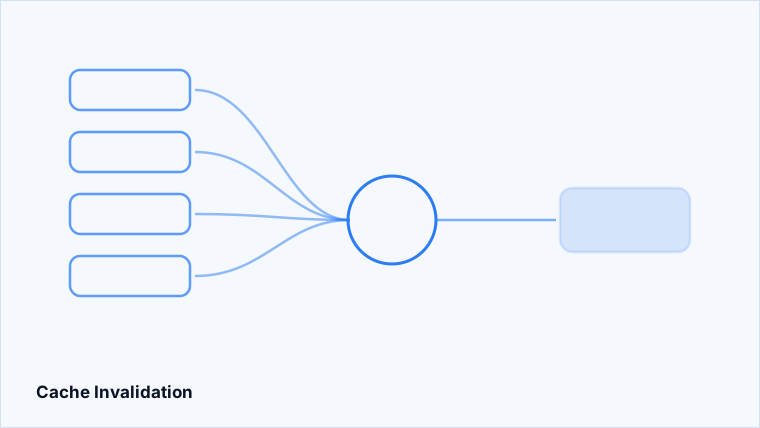
Cache Invalidation Is a Write-Path Problem
Most stale-cache bugs are not caching bugs. They are write paths that forgot they had readers. Here is how to make invalidation structural instead of remembered.
- Architecture
- Caching
- Performance

Writing
Notes on architecture, data modelling, caching, security and the engineering practice that keeps systems maintainable.
Most stale-cache bugs are not caching bugs. They are write paths that forgot they had readers. Here is how to make invalidation structural instead of remembered.
Read the article6 articles
Most stale-cache bugs are not caching bugs. They are write paths that forgot they had readers. Here is how to make invalidation structural instead of remembered.
Application-layer validation protects the request path you thought of. Database constraints protect every path, including the import script written at 2am eighteen months from now.
A versioned base path is not a versioning strategy. What actually determines whether an API can evolve is the shape of its responses and the discipline of never widening a promise you cannot keep.
Standalone components removed a layer of ceremony from Angular. They also removed the structure that was holding some codebases together. Here is what to keep.
Institutional platforms do not get rewrite windows. The constraint is not technical difficulty — it is that the system must keep working every single day while you change it underneath.
Hiding a button is not authorization. A walk through the controls that actually protect an admin API: stateless JWT, method-level roles, rate limiting and the mistakes that survive code review.